Artist
Tancredi Parmeggiani
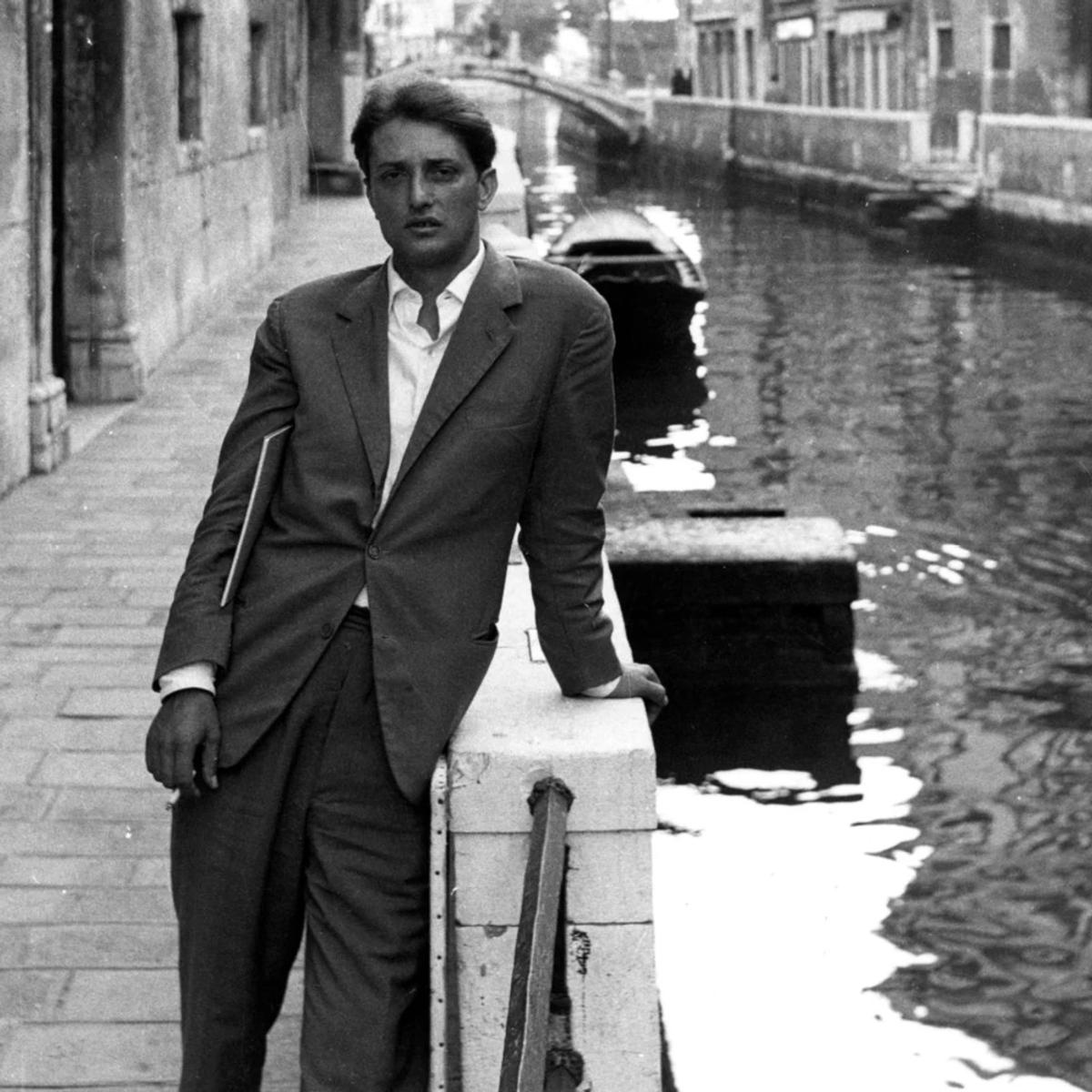
Tancredi Parmeggiani was born in Feltre in 1927 and studied at the Accademia di Belle Arti in Venice, where he befriended Emilio Vedova and encountered the European avant-garde. His life changed in 1951 when he met Peggy Guggenheim, who installed him in a studio at her Palazzo Venier dei Leoni and placed him under contract — a distinction she extended to only one other artist, Jackson Pollock. Through her patronage, his work entered MoMA, the Guggenheim, the Tate and major collections across the United States and Europe.
Tancredi signed Lucio Fontana's Manifesto dello Spazialismo in 1952, but his sensibility was always his own: molecular, chromatic, made from within. His canvases — laid flat on the floor, built mark by mark — read like maps of another universe, fizzing with compressed light and energy. In the late 1950s, shaken by war and the threat of nuclear catastrophe, the work darkened and grew more figural and politically charged. He exhibited at the Venice Biennale in 1964 and died in Rome that September, aged 37, leaving the note: Life is still entirely to be discovered.
Key details
- Birth
- September 25, 1927
- Death
- September 27, 1964
- Training
- Accademia di Belle Arti, Venezia (from 1946)
- Movements
- Spazialismo, Informal
The best Italian painter, from the Futurists onwards.
Biography
Born in Feltre on 25 September. Shortly after his birth the family moved to Bologna, where he spent his childhood until the age of thirteen together with his younger siblings Romano and Silvia.
Attends a life-drawing school and makes his first portraits.
The premature death of his father in 1935, when Tancredi was only eight, and his mother's declining health, lead to the family's return to Feltre, where he and his siblings are placed in the care of their grandmother and maternal aunt.
Moves to the Salesian college in Belluno, where he attends middle school and classical lyceum together with his brother Romano.
Moves to the art lyceum in Venice. Among his teachers are Elena Bassi, Gino Morandis, Giovanni Majoli, Manlio Dazzi and Luciano Gaspari. His preparation for the move is guided in Feltre by the painter Romano Conversano, who introduces him to Montale, Saba, Baudelaire and García Lorca — a poet banned for his anti-fascism and his unflinching stories of real life. It is also in Conversano's studio that he meets Emilio Vedova, then in hiding as a partisan in a barn in the area. Tancredi describes an overwhelming Vedova, exuberant in gesture and stature, who would greet him with a shouted ‘the green I want you green’ — a line from García Lorca that became a habitual way for the two of them to greet each other.
Frequents the Associazione dell'Arco, which promotes group exhibitions featuring Edmondo Bacci, Mario Deluigi and Virgilio Guidi; follows the Cineclub Francesco Pasinetti, driven by Tinto Brass, Giovanni Millner and Tim Arcalli. Attends Armando Pizzinato's courses at the Scuola libera del Nudo (Accademia di Belle Arti di Venezia).
Intent on reaching Paris to breathe a more open culture, he walks to France and arrives in Lyon. Underage and undocumented, he is sent back to Italy with an expulsion order. Traces of this journey survive in the drawings he gives to those who help him survive. Returns to Feltre, where he has a role in the film La mascotte dei diavoli blu, directed by Carlo Alberto Baltieri.
The year of his first exhibition, a group show at the Istituto Professionale Rizzarda in Feltre together with his brother Romano, R. Ocri, T. Piccolotto, B. Milano, R. D'Ambros, F. Luciani, G. Fachin and G. Palminteri. At the 24th Venice Biennale he sees the Fronte Nuovo delle Arti and, in the Greek Pavilion, part of Peggy Guggenheim's collection, which offers an open view onto avant-gardes such as cubism and surrealism and presents works by artists including Kandinsky, Mondrian and Pollock. Continues to frequent Vedova, Bacci, Guidi, Deluigi, Morandis, Licata, Finzi and Vianello.
The concrete thought of painting
In May he holds his first solo show at the Galleria Sandri in Venice, showing works in a concrete and neoplastic vein, presented by Virgilio Guidi. From this point on he also begins an intense output of writings and reflections on his own work.
He is in Rome, where he lives with Milton Gendel and his wife. Giulio Turcato hosts him occasionally; he frequents the studio of Fabio Rieti and Gilles Aillaud. It is a particularly productive time, in which he draws incessantly and experiments with various supports. Gendel describes his rotating spheres and his landscapes resembling tangled skeins as something unique — nobody else in Italy was painting like that at the time. Through Turcato he meets and frequents the founders of Forma 1. His works go on sale at the gallery-bookshop L'Age D'Or, opened by Forma 1 that same year. Here he also comes into contact with publications from the Solomon Guggenheim Foundation Museum of Non-Objective Painting and with European avant-garde magazines.
Takes part in Arte Astratta e Concreta in Italia 1951 at the Galleria Nazionale d'Arte Moderna in Rome with three works: Luce n.1, Luce n.2, Luce n.3. The exhibition is organised by L'Age D'Or and the Art Club. He returns to Venice immediately after the show. Shortly afterward, L'Age D'Or also closes. Bill Congdon introduces him to Peggy Guggenheim, who puts a studio at his disposal at Palazzo Venier dei Leoni. He is in contact with the most important international artists, including Jackson Pollock. He sees the work of Jean-Paul Riopelle and Mark Tobey through Michel Tapié, who was at that time working on the volume Un art autre.
Primavera
He dedicates one of his most recent works to Peggy Guggenheim, achieved with small brushstrokes applied in an almost uncontrolled, written manner — universal landscapes that evoke a field in bloom: the work's title is Primavera. Carlo and Renato Cardazzo, owners of the Galleria del Naviglio in Milan and the Galleria del Cavallino in Venice, together with Vinicio Vianello, forge a connection with the Milanese Spatialists.
Joins the Spatial movement, signing the Manifesto del Movimento Spaziale per la televisione (Manifesto of the Spatial Movement for Television). Takes part in the Premio Graziano at the Galleria del Cavallino and wins the acquisition prize with I nostri rapporti con l'Oriente. Takes part with Sole nero in the Premio Arbiter in Trieste and in the 39th Collective Exhibition of the Opera Bevilacqua La Masa with Composizione N.1 and Composizione N.2. He receives an acquisition award at the Premio Gianni of the Galleria del Naviglio, where he meets Enrico Baj and Sergio Dangelo of the Nuclear Movement. Takes part in the exhibition Artisti spaziali veneziani at the Galleria del Cavallino and in the show Artisti spaziali at the Galleria Casanova in Trieste; takes part in the Premio Graziano at the Galleria del Naviglio and wins, ex aequo with Gustavo Boldrin and Alessandro Diani, the 40th Collective Exhibition of the Opera Bevilacqua La Masa with the work Aspirazione a New York. Peggy Guggenheim donates Primavera to the Museum of Modern Art in New York.
The Cardazzo brothers dedicate solo shows to him in Venice and Milan. At the Galleria Pro Arte in Lugano he exhibits in the show Sei artisti spaziali with Capogrossi, Crippa, Dova, Fontana and Matta. In June the exhibition moves to Vicenza, at the Galleria del Calibano, with the addition of Deluigi, De Toffoli, Donati, Peverelli, Morandis and Vinicio. In late May comes the solo show Natura=Spazio at the Galleria del Naviglio: in his notes he speaks of space, nature and man, who through thought has assimilated space, making of it the most perfect concept of infinity. Takes part in the Premio Burano. In September, on the occasion of the exhibition at Ca' Giustinian in Venice, Anton Giulio Ambrosini writes the manifesto Lo Spazialismo e la pittura italiana nel XX secolo (Spatialism and Italian Painting in the 20th Century). Tancredi takes part in the exhibition and is among the signatories of the manifesto. The Palazzo Belle Arti in Turin hosts the exhibition Pittori d'oggi Francia-Italia. Tancredi brings La serra, shown again together with Gioco della palla at the 41st Collective Exhibition of the Opera Bevilacqua La Masa between late 1953 and early 1954. These are also the years of Peggy Guggenheim's donations to many American museums, and of the growth of collecting across the Atlantic.
Takes part in the exhibition 16 artisti veneziani at the Galleria Numero in Florence. The 27th Venice Biennale rejects the works he submits. In the autumn Peggy Guggenheim organises an exhibition in progress at Palazzo Venier dei Leoni between her daughter Pegeen and Tancredi.
Europe and the world
Takes part in Tendances actuelles 3 at the Kunsthalle in Bern, together with Sam Francis, Mark Tobey, Georges Mathieu, Camille Bryen, Henri Michaux, Jackson Pollock and Jean-Paul Riopelle. Wins the 3rd Esso Painting Prize, sponsored by the Venice Biennale, with Soggiorno a Venezia. The work is acquired by the Museo d'Arte Moderna di Ca' Pesaro. Takes part in the group shows of the Galleria Stadler, directed by Michel Tapié, and of the Galleria Paul Facchetti.
In the autumn he holds solo shows at the Galleria del Cavallino and at the Galleria Selecta in Rome (also directed by Carlo Cardazzo).
Takes part in the exhibition Italy. The New Vision. Selection of Contemporary Painting and Sculpture at the World House Galleries in New York, and in Trends in Watercolors Today at the Brooklyn Museum.
Peggy Guggenheim continues to support him abroad: the Seidenberg Gallery in New York and the Hanover Gallery in London hold solo exhibitions of his work. The newspaper Il Giorno promotes Giovani artisti italiani at the Società Permanente in Milan; Tancredi takes part with three works. Arturo Deana, owner of the Trattoria La Colomba, commissions him to decorate the ceiling of one of its rooms. On 15 November he marries the Norwegian painter Tove Dietrichson. The Kansas State College in Kansas City, the Art Museum in Pasadena and the Carnegie Institute in Pittsburgh exhibit his works.
The Galleria del Cavallino dedicates an evening to him, Venezia saluta Tancredi (Venice bids Tancredi farewell), where he presents A proposito di Venezia, works of homage and farewell to the city, from which he intends to distance himself for a while. He settles in Milan, where he begins working with Beatrice Monti of the Galleria dell'Ariete, where in June he again exhibits A proposito di Venezia. He spends the summer in Sweden and Norway; he sees the works of Munch and Ensor, which strike him deeply. Takes part in the 11th International Lissone Painting Prize; moves with Tove to Paris.
Sorrowful jests, tinged with the ridiculous
In a Paris torn apart by the Algerian War and hollowed out by grief, the Facezie are born, reflecting an existential and artistic shift. ‘The suffering I saw in Paris,’ Tancredi says, ‘reminded me a little of what I had seen in my early youth, bringing back old, alienating reasons, so I began inserting figures into my paintings (…) these figures came out of the pen or brush as figurative emotional impressions, just as the earlier ones had been non-figurative emotional impressions. I call almost all these paintings Facezia — sorrowful jests, perhaps, tinged with the ridiculous.’ He also creates the Arabeschi, drawings and temperas with poetic titles of extreme elegance. In Paris he reconnects with Riccardo Licata, through whom he also meets Aldo Mondino; renews his ties with Paul Facchetti and the Galleria Stadler, comes into contact with Giacometti and with the surrealist circle of Jean-Jacques Lebel, Victor Brauner and Alain Jouffroy; revisits the work of CoBrA and of Yves Klein. In December he takes part in the 8th Rome Quadriennale with Svezia, Norvegia, and Omaggio ai Vichinghi. Also in December, on the 20th, his first daughter, Elisabet, is born.
Exhibits with Licata and Mondino at the Galleria Bellechasse. In the spring he goes to Sweden with Elisabet and Tove. Between April and June, at the Palazzo Reale in Milan and the Galleria Nazionale d'Arte Moderna in Rome, the exhibition Arte italiana del XX secolo da collezioni americane is held, where Primavera — donated in 1952 by Peggy Guggenheim to the Museum of Modern Art in New York — is shown. In response to the racist trial in South Africa in 1959, Lebel and Jouffroy organise Anti-procès at the Galerie des Quatre Saisons, a show on human rights and against every form of moralism, in which a large and heterogeneous group of artists takes part, Tancredi among them. The second edition is held at the Galleria Il Canale in Venice, timed to coincide with, and stand against, the Biennale. A few days later, again at the Galleria Il Canale, Tancredi opens a major solo show, with fifty-two works — drawings, watercolours and paintings from the previous two years. Provocatively, he exhibits two entirely painted rolls of toilet paper, Arte Formale and Arte Informale. He spends the summer and autumn in Val Camonica: the prehistoric rock carvings influence his drawings and play a role in the birth of the Mostri (Monsters).
Thanks to Lebel he meets Arturo Schwarz, owner of an up-to-date bookshop-gallery that promoted surrealism and dadaism. In early '61 Schwarz launches the Collana del bianco e nero, publishing Tredici facezie di Tancredi, ink drawings from 1960 characterised by an automatic mark. He frequents the Bar Giamaica in Brera, where he meets Guido and Sandro Somaré, Arturo Vermi, Angelo Verga, Andrea Cascella and Sandro Martini, and where he also reconnects with Roberto Crippa, Gianni Dova and Sergio Dangelo. In early March he opens an exhibition on the Facezie at the Galleria dell'Ariete, presented by Alain Jouffroy. The final edition of Anti-procès is held in Milan at the Galleria Brera. Among the participants are also Twombly and Rauschenberg, but Tancredi decides to withdraw his own participation. In June he is included in the group show Sei pittori veneziani at the Galleria La Loggia in Bologna, and takes part in the Premio Morgan's Paint and the 3rd International Biennale for Painting and Sculpture Italy-Yugoslavia in Rimini. Towards the end of the year he makes a brief stay in Sweden. On his return he devotes himself to the Diari Paesani, his response to Rauschenberg's Combine paintings, seen at the Galleria dell'Ariete in October.
Painted by me and by others
‘In these Diari Paesani of mine,’ Tancredi says, ‘I want to reveal that reality of the spirit which I found on returning from Sweden, where I had worked with a newly recalibrated eye, and where I tried to capture that atmosphere so Italian — or more precisely Veneto-Lombard — that our everyday life is so rich in.’ The Fiori dipinti da me e da altri al 101% express his analyses, his critique of the market, his awareness of a human and social alienation. Speaking of these works, he tells Berto Morucchio that he has ‘finally burst’: ‘these are the new foundations, and they connect back to my whole past, tying everything together. Inside there is Rothko, Miller, Rauschenberg and Yevtushenko, the young Russian poet (…) inside there is the whole Chinese, Persian, Greek, Egyptian, Muslim, Italian, French tradition.’ Takes part in the Premio Apollinaire at Ca' Giustinian in Venice, where he shows Senza titolo (Giornali senza parole) of 1961 and Senza titolo (Fiori dipinti da me e da altri al 101% n.5) of 1962; takes part in Continuità n.2, conceived by Guido Ballo; takes part in the 1st International Exhibition of the Cooperativa Artistica at the Galleria Bevilacqua La Masa, and in June the Galleria Il Canale dedicates a solo show to him in which he exhibits the Fiori dipinti da me e altri al 101% and three large canvases titled Hiroshima. In the autumn he takes part in the Premio Marzotto. Returns to Milan after a brief stay in Paris. His distress manifests itself ever more deeply.
He is hospitalised for two months at the Villa Tigli clinic in Monza. Despite his near-total inactivity, the Galleria Il Canale and the Galleria dell'Ariete secure his participation in various group shows: the 14th Premio del Fiorino National Exhibition in Florence, the 4th International Art Biennale of San Marino, the 12th National Exhibition of Painters of the Gulf of La Spezia, and the 17th F.P. Michetti National Painting Prize in Francavilla al Mare. With Hiroshima 2. Baldoria ad Hiroshima he wins the 7th Amedeo Modigliani International Painting and Sculpture Prize, City of Livorno. On 26 June his son Alessandro is born; in the autumn Tove returns to Sweden with the children. For a brief period he lives with his brother Romano in Rome. From there he goes to Venice.
‘I don't know how to write — perhaps I will manage to paint what I feel.’
From his diaries emerge difficulty and solitude. He is admitted to the San Servolo psychiatric hospital, where he remains until early June. He is invited to take part in the 32nd Venice Biennale with three works: Omaggio a Gauguin, Giornali senza parole, and Dalle origini al carnevale. Morucchio, recalling the day of the opening, remembers him clinging to his beloved wife, in a state of mind by then shattered. In July he leaves for Sweden with Tove and the children, and there takes up drawing again: he loves leaves, plants, an idea of nature to be brought into homes and cities where there is not enough of it. In August he returns alone to Rome. His last works recount reality with an incredible objectivity, perhaps in an attempt to give voice to an extreme need for inquiry, expressed in a well-known line from his notes, where he says that ‘life is still entirely to be discovered.’ On 1 October his body is recovered from the Tiber, near Ponte Sisto.